
A smarter way to know what you breathe.

Knowing your air takes more than an AQI. It takes What's actually in your air — the particles, vapors, and microbes present, identified by name rather than lumped into one number. and Where each finding comes from and how much of it you've been breathing, for how long — the source and the dose..

Get Lution

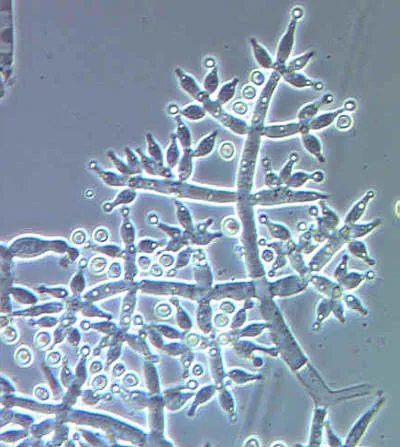
Aspergillus fumigatus

Thermotolerant mold

Mold
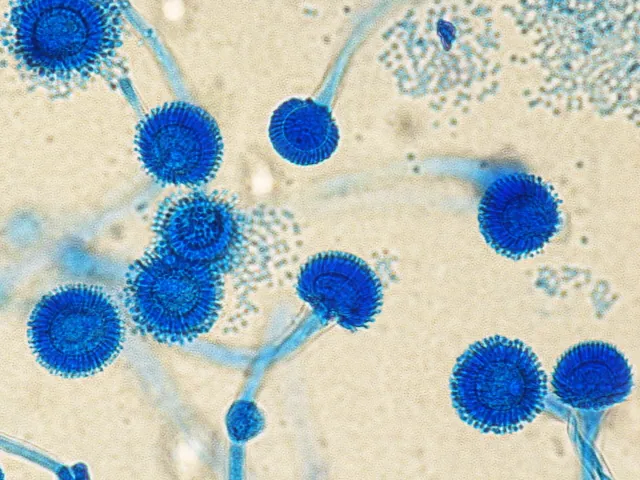
Aspergillus fumigatus under the microscope

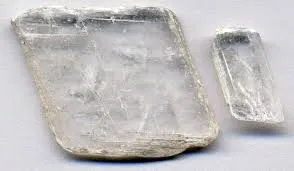
Gypsum

Drywall dust (calcium sulfate)

Construction Materials
Gypsum under the microscope
  • Tracked by Lution
  • Tracked by traditional testing (ERMI)
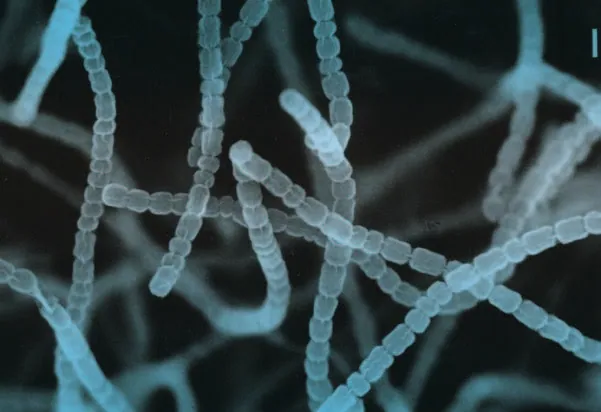
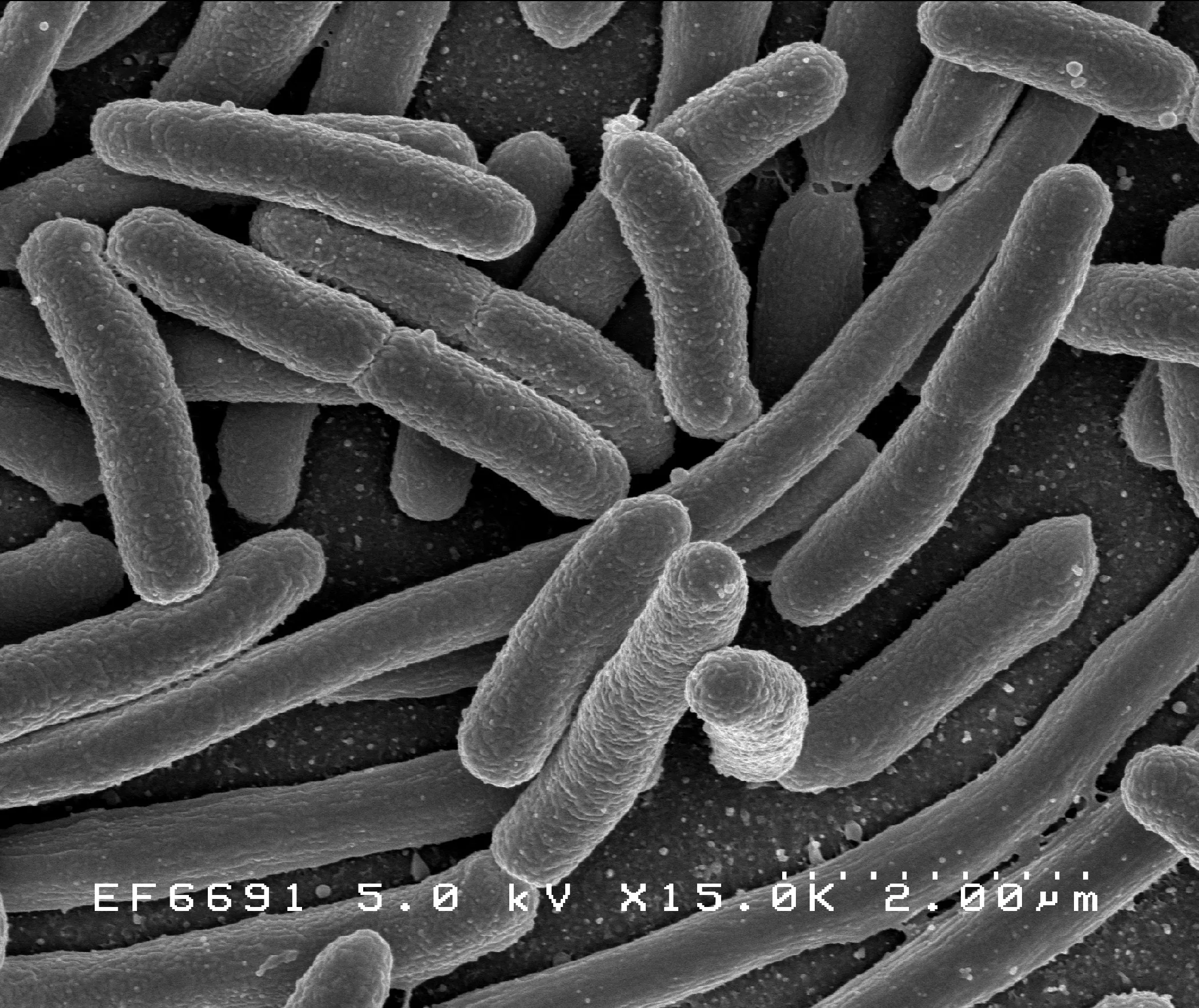
Streptomyces

Damp-building bacterium

Bacteria
Streptomyces under the microscope
What it signals:The source of the classic "musty basement" odor. Its presence is a marker of active or past water damage.
Where it's found:Behind damaged drywall • Damp insulation • Crawlspaces and basements • Areas with prior leaks or flooding
  • Tracked by Lution
  • Tracked by traditional testing (ERMI)

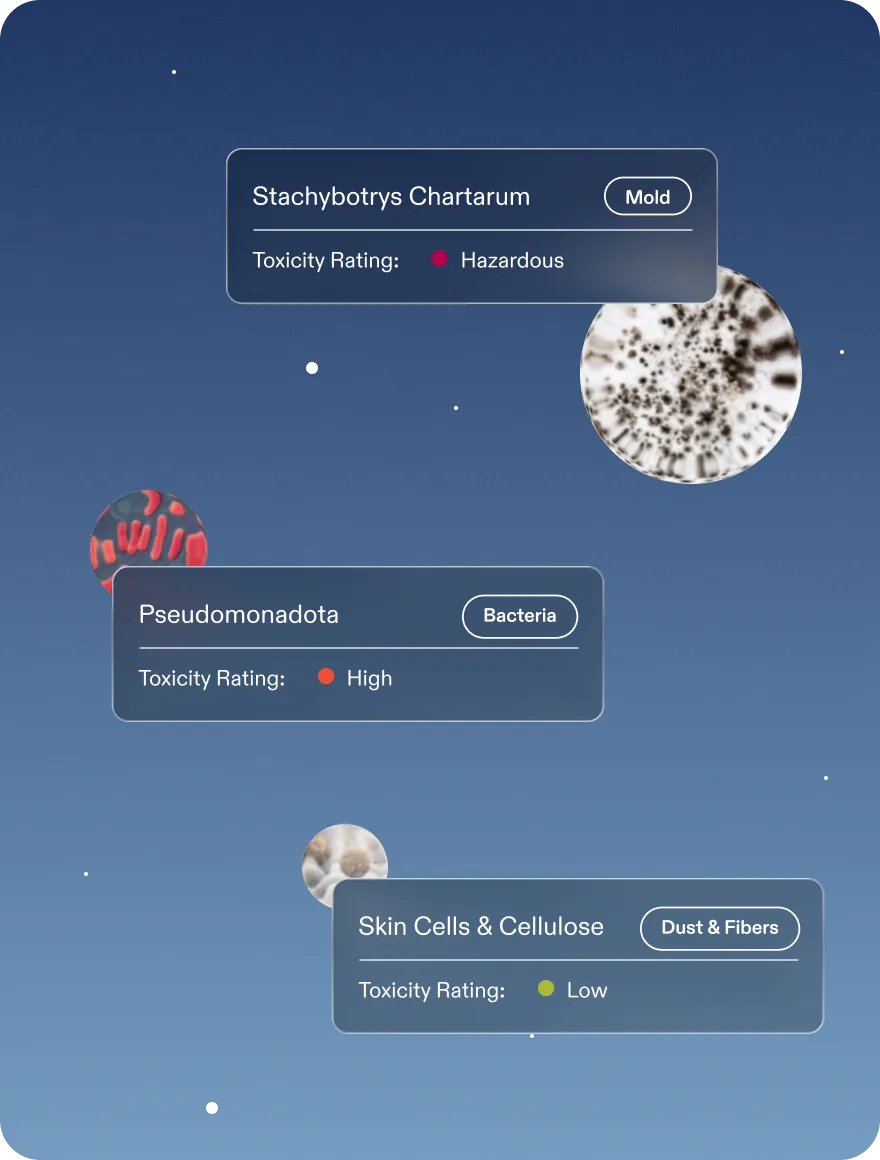
Lution Level+Live - Living Room

Time to run a dehumidifier.

Humidity has been above 60% for three days. Damp air favors mold growth.

31
Poor
PollutantLution Load
  • Penicillium chrysogenumMold5.5
  • Aspergillus nigerMold4.0
  • Aspergillus versicolorMold3.0
  • Skin cells & celluloseDust & Fibers2.0
  • Thermophilic actinomycetesBacteria2.0
  • Cat DanderDander & Pollen1.3

+18 More Detected

Lution is a system that combines sensors, sampling, and accredited laboratory analysis — reading your air continuously, and from a sample that has seen over a million times more air than any spot test.

01 — The Sensors

Track

Installed in your home, Lution's powerful sensors breathe the same air you're breathing, in real time. They track how conditions change throughout the day, capturing patterns and shifts that one-off tests miss...

02 — Your Filters

Capture

Lution uses your home's own filters to sample what's moving through your air. Your filters serve as both filtration and sampling tools, capturing airborne material as it moves through your system — roughly 55 to 90 million cubic feet of air over 90 days.¹ Using the compact hand vacuum provided, you collect a sample on your own time and send it to an accredited partner laboratory for analysis.

The Lution lab analysis

03 — The Lab

Analyze

Accredited partner laboratories run a battery of tests on your sample — gene-targeted sequencing that identifies mold and bacteria to the species, and microscopy for the materials that make up the rest of your dust.

See the full particle index
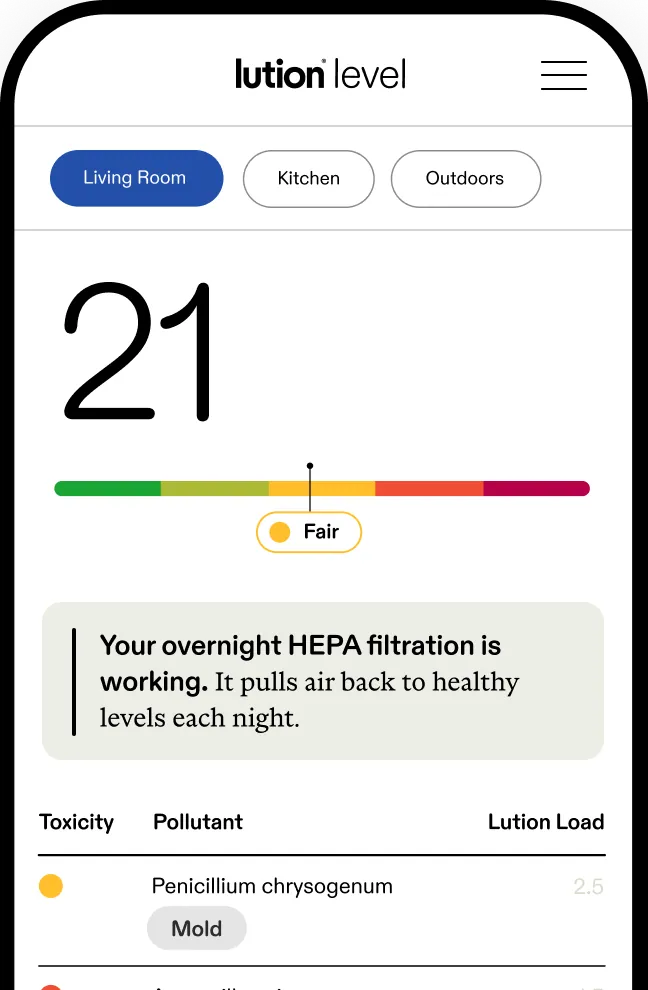
The Lution app feed showing your Lution Level

04 — Your Lution Level

Guide

The Lution app brings everything together. It translates sensor data and lab findings into a clear, ongoing picture of your air, right in your pocket. When something changes, you know what's happening—and what to do next. The app is also your home base for your Lution membership, bringing together filter deliveries, support, and everything else that keeps your system running smoothly.

Spore trap: 5 L/min × 5–10 min = 25–50 L. Residential HVAC: 35,000–55,000 L/min, 90 days at 35% runtime = 1.6–2.5 billion liters (55–90 million ft³). Ratio: 32–100 million. ↩

Air monitors count. Lution explains.

A used HVAC air filter

Time to change your filter.

Your HVAC filter is no longer working efficiently and is due for a change.

An industrial smokestack against the sky

Close & seal your windows.

Outdoor particle levels are rising with the wind from the east. Close the windows and run filtration until it passes.

Fine airborne moisture wisps

Moisture levels are high.

Damp air favors mold growth. Try running the AC or a dehumidifier.

A vacuum cleaner

Check your vacuum filter.

Check that your vacuum uses a HEPA filter, so it doesn't return fine particles to the air.

A glass of water

Time to deep clean the dishwasher.

Your latest lab results found bacteria that favor standing water. Dishwasher and washing-machine seals are common sources — a deep clean helps.

A rising column of smoke

Open your windows.

Combustion particles are high — candles or a fireplace are the usual sources. Open a window for a while, the air outside is better.

A frying pan on the stove

Turn on your vent hood.

Particles are rising the way they do when someone's cooking. Try the vent hood or a fan.

How Lution compares.

Other MonitorsLution
Identifies mold to the speciesNoYes
Identifies bacteria to the speciesNoYes
Identifies pet dander and pollenNoYes
Identifies materials (gypsum, fiberglass, soot)NoYes
Reads formaldehyde, VOCs, NOx and CO₂PartialYes
Samples the home's own filtersNoYes
Estimates dose — what, how much, for how longNoYes
Tracks durationYesYes
One daily score, the Lution LevelNoYes
24/7 coverageYesYes
Long-term results trackingYesYes
A calm, uncluttered room where the Lution system disappears into the background

Designed to disappear.

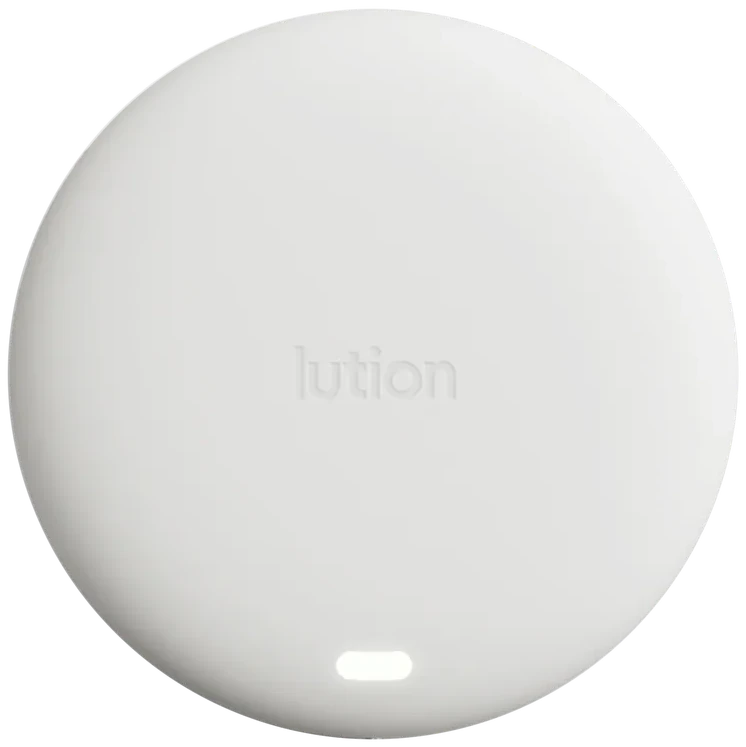
A sensor designed to disappear

Daily monitoring, scoring and guidance

Plug in the sensor and forget it's there. Lution reads your air around the clock, scores it every day, and tells you what to do next. Your membership includes your annual Lution testing workup — the full battery of laboratory tests and analysis, a $299 value — plus the reminders, alerts and guidance that keep it all running.

Explore the Membership

Tracking 100,000+ particle types.

Aspergillus terreus

Soil and compost mold

Mold
Aspergillus terreus under the microscope
Where it's found:Compost • Soil • water-damaged HVAC
  • Tracked by Lution
  • Tracked by traditional testing (ERMI)
Legionella

Waterborne bacterium

Bacteria
Legionella under the microscope
Where it's found:Cooling towers • Hot water tanks <140°F • Fountains
  • Tracked by Lution
  • Tracked by traditional testing (ERMI)
Nocardia spp.

Soil-borne bacterium

Bacteria
Nocardia spp. under the microscope
Where it's found:Tracked-in soil • HVAC fresh-air intakes
  • Tracked by Lution
  • Tracked by traditional testing (ERMI)

Scedosporium spp.

Wet-soil mold

Mold
Scedosporium spp. under the microscope
Where it's found:Soil • Polluted water • HVAC condensate
  • Tracked by Lution
  • Tracked by traditional testing (ERMI)

Crystalline silica

Respirable mineral dust

Dust & Fibers
Crystalline silica under the microscope
Where it's found:Drywall sanding • tile cutting • engineered-stone fabrication
  • Tracked by Lution
  • Tracked by traditional testing (ERMI)

Asbestos

Legacy mineral fiber

Dust & Fibers
Asbestos under the microscope
Where it's found:Pre-1980 building materials disturbed during renovation
  • Tracked by Lution
  • Tracked by traditional testing (ERMI)

Diesel exhaust soot

Combustion particulate

Combustion & Soot
Diesel exhaust soot under the microscope
Where it's found:Traffic infiltration • Attached garages • Idling generators
  • Tracked by Lution
  • Tracked by traditional testing (ERMI)

Gram-negative bacterial material

Shed by water-loving bacteria

Bacteria
Gram-negative bacterial material under the microscope
Where it's found:Humidifiers • Drain pans • Water-damaged materials
  • Tracked by Lution
  • Tracked by traditional testing (ERMI)
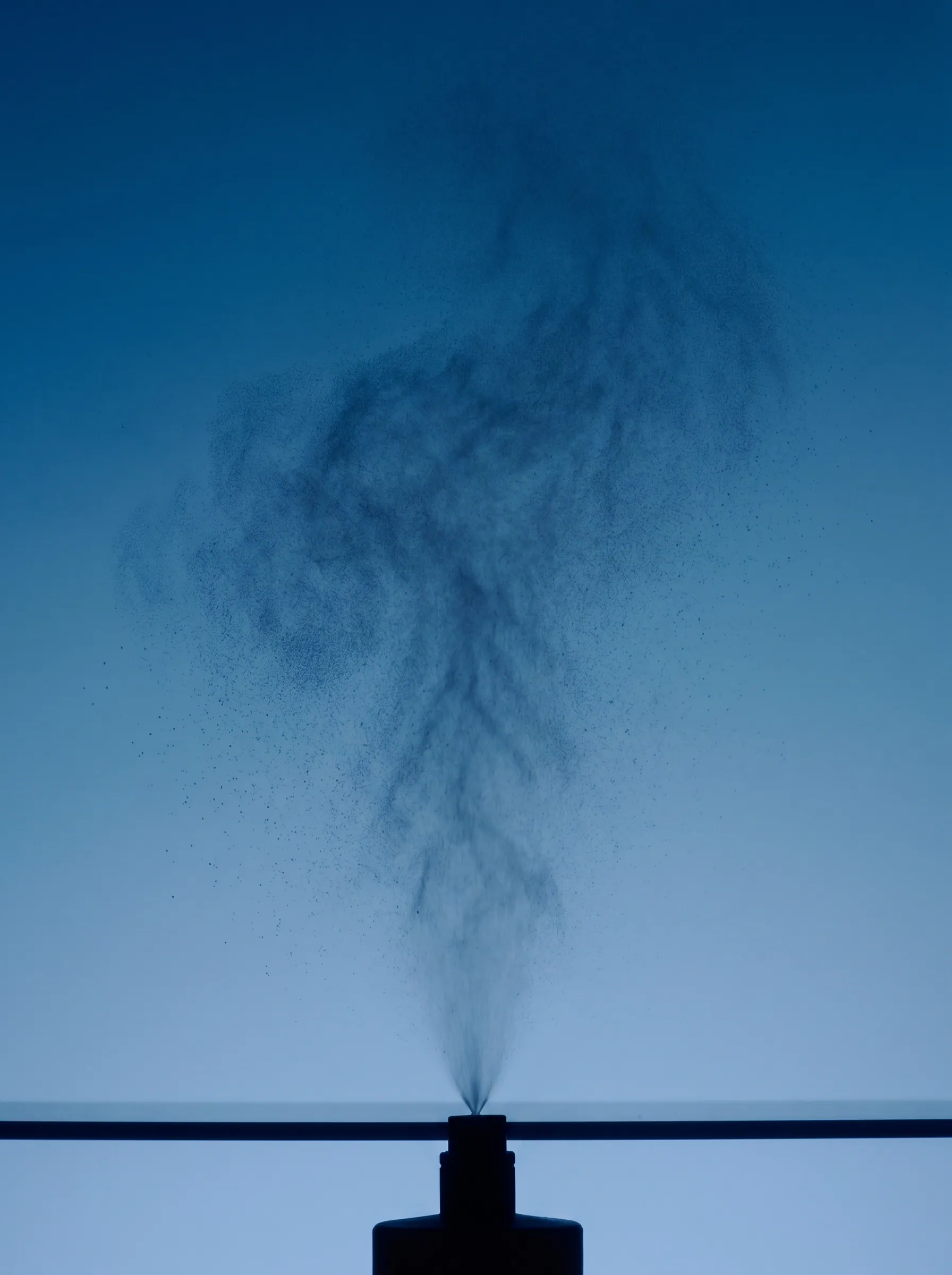
Trichoderma harzianum

Hydrophilic mold

Mold
Trichoderma harzianum under the microscope
Where it's found:Wet drywall • Water-damaged wood • HVAC drain pans
  • Tracked by Lution
  • Tracked by traditional testing (ERMI)

Aspergillus terreus

Soil and compost mold

Mold
Aspergillus terreus under the microscope
Where it's found:Compost • Soil • water-damaged HVAC
  • Tracked by Lution
  • Tracked by traditional testing (ERMI)

Legionella

Waterborne bacterium

Bacteria
Legionella under the microscope
Where it's found:Cooling towers • Hot water tanks <140°F • Fountains
  • Tracked by Lution
  • Tracked by traditional testing (ERMI)

Nocardia spp.

Soil-borne bacterium

Bacteria
Nocardia spp. under the microscope
Where it's found:Tracked-in soil • HVAC fresh-air intakes
  • Tracked by Lution
  • Tracked by traditional testing (ERMI)
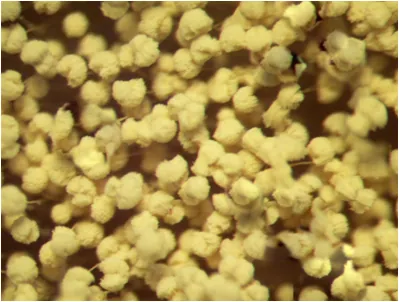
Scedosporium spp.

Wet-soil mold

Mold
Scedosporium spp. under the microscope
Where it's found:Soil • Polluted water • HVAC condensate
  • Tracked by Lution
  • Tracked by traditional testing (ERMI)
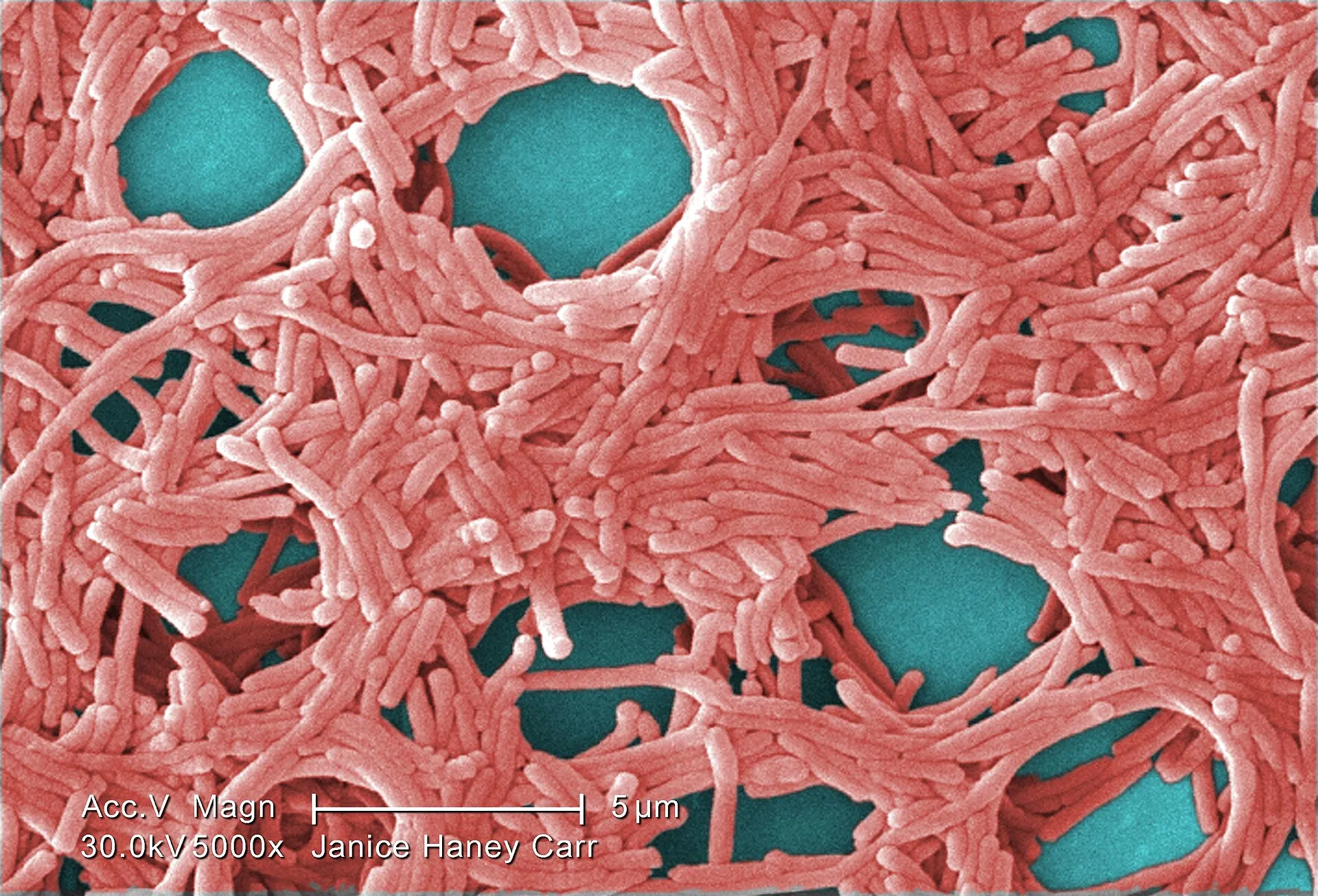
Crystalline silica

Respirable mineral dust

Dust & Fibers
Crystalline silica under the microscope
Where it's found:Drywall sanding • tile cutting • engineered-stone fabrication
  • Tracked by Lution
  • Tracked by traditional testing (ERMI)
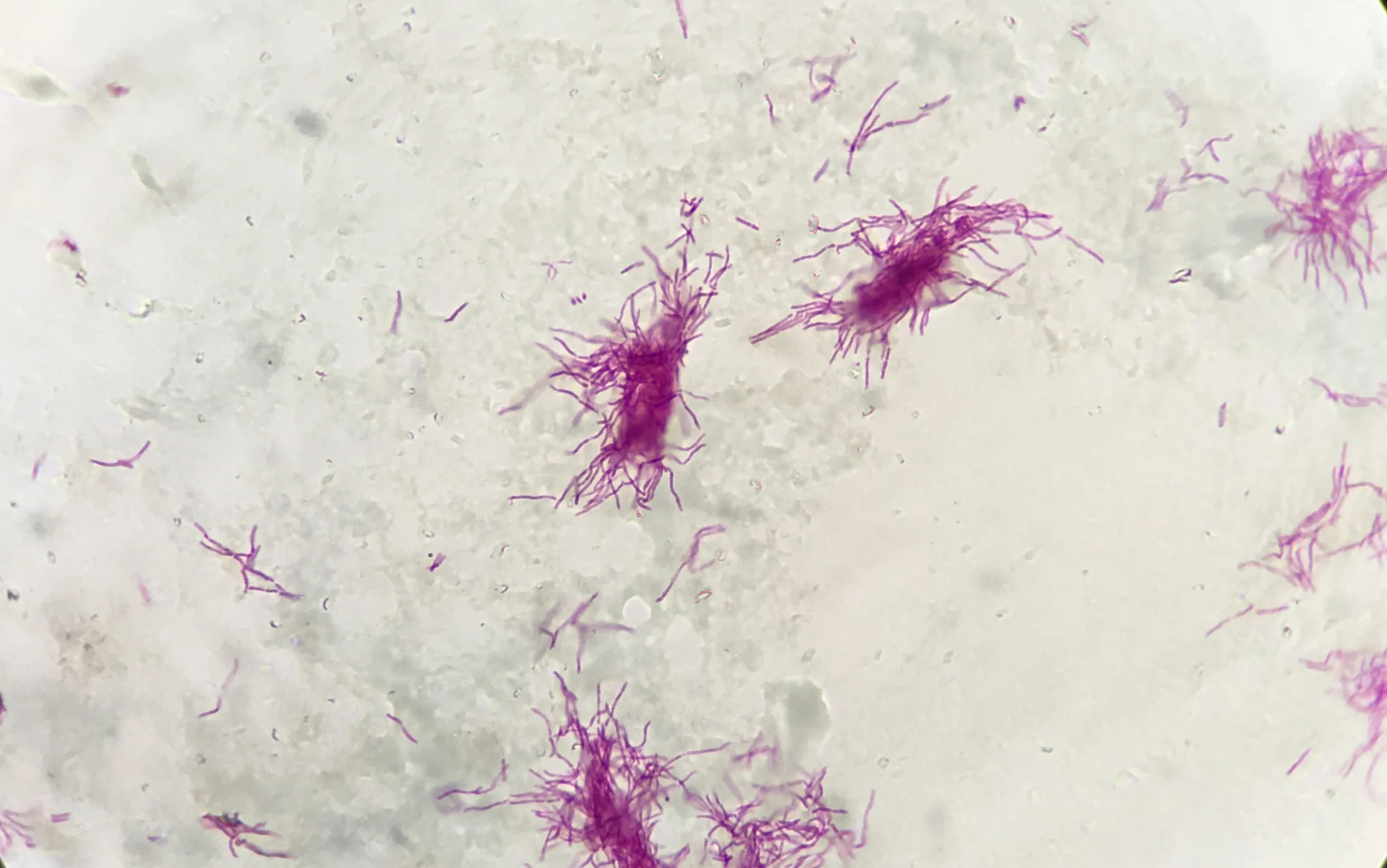
Asbestos

Legacy mineral fiber

Dust & Fibers
Asbestos under the microscope
Where it's found:Pre-1980 building materials disturbed during renovation
  • Tracked by Lution
  • Tracked by traditional testing (ERMI)
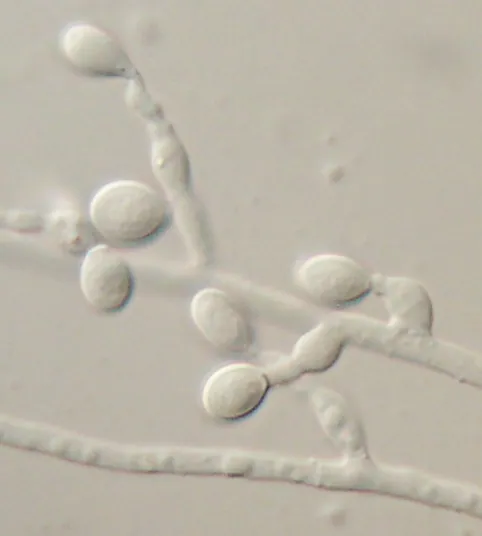
Diesel exhaust soot

Combustion particulate

Combustion & Soot
Diesel exhaust soot under the microscope
Where it's found:Traffic infiltration • Attached garages • Idling generators
  • Tracked by Lution
  • Tracked by traditional testing (ERMI)
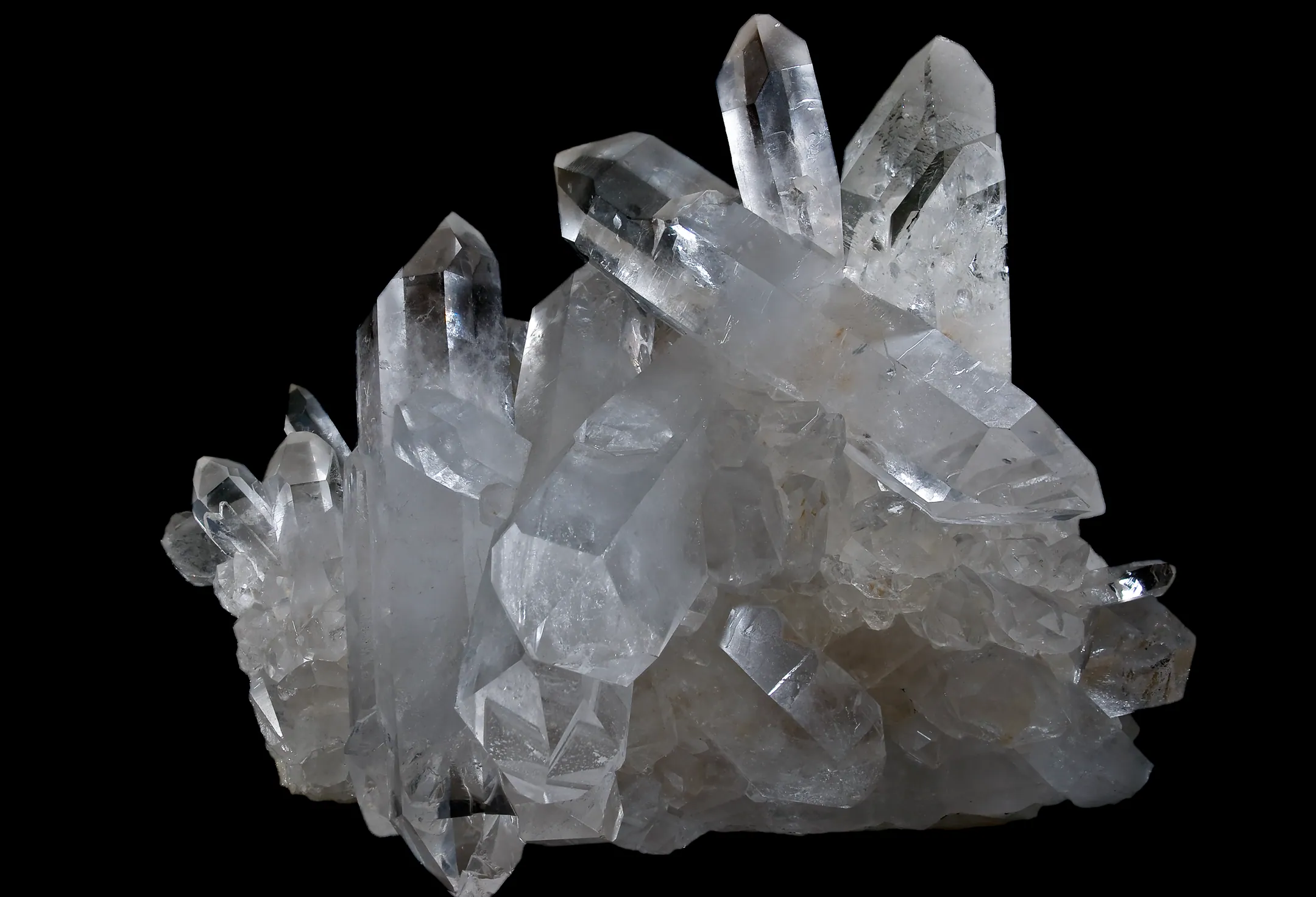
Gram-negative bacterial material

Shed by water-loving bacteria

Bacteria
Gram-negative bacterial material under the microscope
Where it's found:Humidifiers • Drain pans • Water-damaged materials
  • Tracked by Lution
  • Tracked by traditional testing (ERMI)
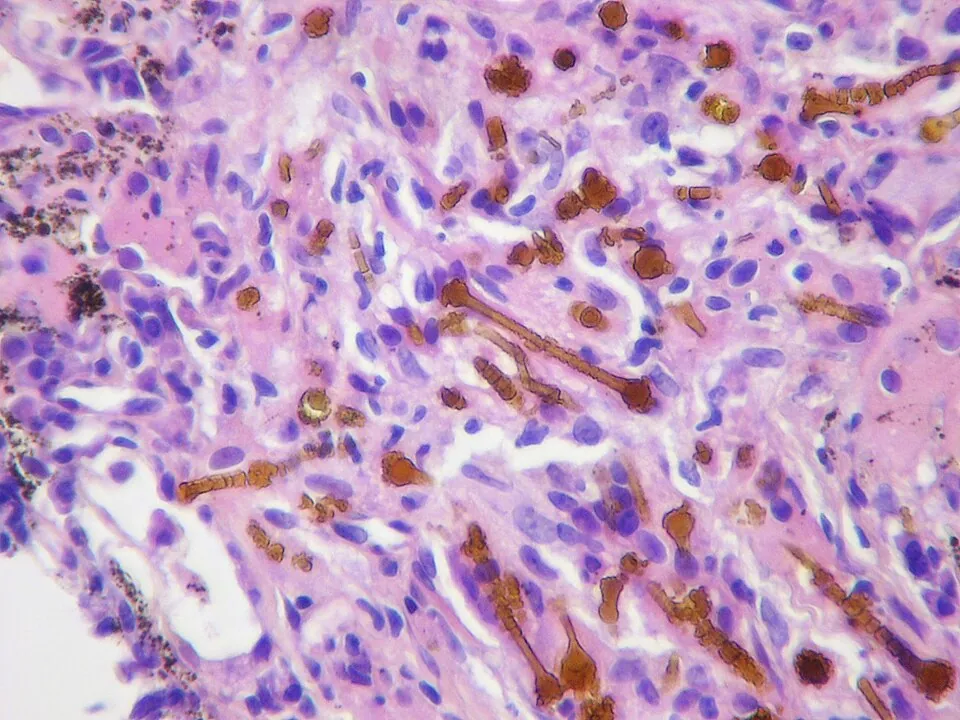
Trichoderma harzianum

Hydrophilic mold

Mold
Trichoderma harzianum under the microscope
Where it's found:Wet drywall • Water-damaged wood • HVAC drain pans
  • Tracked by Lution
  • Tracked by traditional testing (ERMI)

“The air in my house was making me sick. No one could tell me why. And no one could tell me it was a healthy environment again.”

— David, Co-Founder of Lution

Our Story