A man working at a desk by a large window
“No one could tell me what was in the air my family was breathing. When we'd torn the house apart and fixed it, no one could tell me it was gone.”

That unanswered question started it all.

We started Lution because we believe something that sounds obvious, but has never been acted on:

You deserve to know what you're breathing.

Not just confusing data points or a snapshot from one moment in time. You deserve real-time clarity about the air quality in your home, similar to what you'd expect from a modern wearable device.

This level of understanding has been lacking, not due to a lack of science, but because no one has created a system to turn data into actionable insights for those who care about their health: parents, individuals managing conditions, or anyone curious if their home is part of the problem or solution.

We created Lution because we believe this gap is a significant blind spot in modern health and wellness, and we can close it.

The Founders

“We live and breathe Lution — not just because we want to but because we have to.”
Portrait of David

David

Co-Founder of Lution

David Vivero is a cancer survivor whose family battled a cascade of unexplained health issues—autoimmune, neurological, gastrointestinal—for years without finding a common thread. Their home had been professionally inspected. It came back clean.

But it wasn't.

When toxic mold was finally discovered, it had spread throughout the structure, silently shaping the family's health for years while every test said things were fine. The remediation required a complete gut renovation: uninsured, nearly two years, multiples of what he'd already invested. Ultimately, what stuck with David wasn't the renovation. It was the years of searching for answers that were literally in the walls around them.

Portrait of Michael

Michael

Co-Founder of Lution

Michael Marino came to the same problem from a different direction. As an investment banker at Goldman Sachs in lower Manhattan, he meticulously managed his diet and exercise routine without ever connecting that he might be driving inflammation with every breath he took. He watched local residents and first responders develop health conditions that would take years to correlate to airborne exposure. The exposure was everywhere. Clear information was nowhere.

Years later, in Ojai, the 280,000-acre Thomas Fire brought the same realization home: his community lived under wildfire smoke with no way to know what they were actually breathing.

As someone meticulous about his health — tracking nutrition, exercise, and medical data — he subscribed to an air quality monitor expecting it to close the last gap in his health protocol. It gave him eight confusing numbers. PM2.5 was one value. VOCs were another. He had no idea what to do with any of it. The data existed, but it didn't mean anything: not in terms he could act on, and not in terms that connected to his health.

David's experience revealed one side of the problem. Michael's revealed the other. When they compared notes, the structural failures of the entire field came into focus.

What We Found

The system wasn't broken. It just had never been whole.

A petri dish sampled at a single moment in one location — results that miss much of what's there

01

The testing problem

Standard mold testing captures a snapshot—a single moment in one location. It often cultures organisms on growth media, identifying only species that can grow in lab conditions. Most of what's actually present (estimates suggest 70 to 85 percent of species) never appears.

The scoring systems that doctors and inspectors use have a structural flaw: they measure mold species against total dust. In homes with heavy dust from pets, foot traffic, or daily life, dangerous species get diluted in the denominator. A dirtier home can receive a better score—not because it's safer, but due to the flawed math.

Read more about our science
Weight does not equal what counts: ten micrograms of skin cells rates Excellent while ten micrograms of water-damage mold rates Very Poor

02

The monitoring problem

Air quality monitors measure particles by weight: how many micrograms per cubic meter. But weight alone tells you almost nothing about impact. Ten micrograms of sea salt and ten micrograms of a toxic mold species register identically. The monitor can't tell the difference. And entire categories of hazard (bacteria from damp buildings, volatile compounds off-gassing from materials, microbial metabolites that pass through every filter on the market) don't register at all.

Read more about our science
Bacteria — an entire kingdom of contaminants that standard testing ignores

03

The missing kingdom

Perhaps most remarkably, almost no one was testing for bacteria. Decades of research suggest that bacteria from water-damaged buildings may be as consequential as mold, or more so. Yet the standard approach to indoor air testing essentially ignores an entire kingdom of contaminants.

Read more about our science
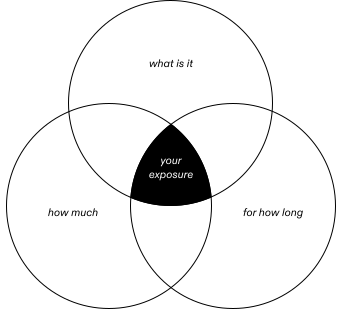
What is it, how much, and for how long combine into your exposure

04

The structural gap

No system measured the three things you actually need to know: what specific contaminants are in your air, how much of each you're being exposed to, and how long the exposure has been accumulating. Existing tools answered fragments. The system wasn't broken. It just had never been whole.

Read more about our science

What we believe

Every home should be a place of protection, not exposure.

Most families trust that their home is safe. That trust should be earned by evidence, not assumed by default.

Knowing matters more than guessing.

The status quo asks families to make consequential decisions based on incomplete information, outdated methods, and single-moment snapshots. Those decisions should be grounded in continuous, comprehensive, specific data.

The people selling solutions should be able to prove they work.

Remediation firms, air purifier manufacturers, and HVAC service providers all function in an environment lacking a dependable method to confirm results. To ensure accountability, we need effective measurement.

When it comes to air, vulnerability is universal.

Children, seniors, and those with respiratory issues or weakened immune systems are not just exceptions. They are the individuals who are most affected by air quality, yet they often receive the least support from existing systems.

We're based in Ojai, California.

Lution is based in Ojai, California, a valley north of Los Angeles that has long drawn healers, health pioneers, and people seeking a more intentional way of living. It's a place that doesn't take good air quality for granted, and a place that has experienced the air quality crisis firsthand; the Thomas Fire of 2017 changed how this community thinks about the air it breathes.

Lution launched from a converted breathwork studio. A space where the work, quite literally, begins with breath.

We are a certified Public Benefit Company & B-Corporation

Aerial view of the Ojai valley in California
Live Lution LevelsUpdated: 3mins agoOjai, California
lutionlevel
8
Ojai's outdoor air is carrying 8.4× the load of pristine air.
Fair
0 2 5 25 100 500+

Overview

Most days, a westerly ocean wind keeps Ojai's air light — little mass, little biology.

Santa Ana days reverse it. The wind shifts direction — and the particles shift with it.

Average: Last 30 Days

6.8

Average: Last 365 Days

8.5

LutionLution, as in: the solution for pollution is higher resolution.

The name carries the mission. Lution exists at the intersection of solution, revolution, and resolution — a new standard for understanding the air inside your home.

We chose it because the problem we're solving isn't incremental. The tools the world has relied on for decades were never designed to answer the question that actually matters: what is in this air, and what does it mean for the people breathing it? Answering that question required something fundamentally new. Not an improvement. A re–solution.